Gros Enfant Mort – Le Sang des Pierres: No Light at the End EN/FR
Band: Gros Enfant Mort
Album Title: Le Sang des Pierres
Label: Fireflies Fall
Release Date: January 23, 2026
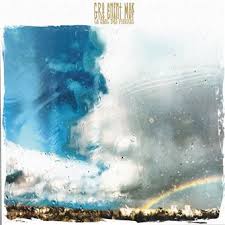
EN
Le Sang des Pierres – Gros Enfant Mort
Where It Comes From
This record wasn’t born in a studio.
It started as notes typed into a phone during a period of total collapse. Raw sentences, written with no plan to turn them into an album. Just writing to stay afloat.
When those texts were read again later, they were already telling a story. Almost in sequence. The music came afterward, not to decorate them, but to push them further, to give that journal more weight.
And that changes everything. You’re not dealing with a concept record here. You’re dealing with lived material.
What It’s Really About
What stuck with me isn’t just the theme of depression. It’s the way it’s framed.
The record doesn’t treat it like a personal flaw that needs fixing. Instead, it places it in a wider context, social exhaustion, work pressure, isolation, the constant push to “get better” and keep functioning.
This is miles away from the usual heroic resilience narrative.
Here, it’s less about bouncing back and more about figuring out how not to drown.
FR
Le Sang des Pierres – Gros Enfant Mort
D’où ça vient
Ce disque n’est pas né en studio.
Il commence par des notes écrites sur un téléphone, pendant une période d’effondrement. Des phrases brutes, sans intention d’en faire un album au départ. Juste écrire pour tenir.
Quand ces textes sont relus plus tard, ils racontent déjà quelque chose. Presque dans l’ordre. La musique vient ensuite, comme une manière d’habiller, ou plutôt d’amplifier, ce journal.
Ça change tout : on n’est pas face à un concept, mais à un matériau vécu.
Ce que ça raconte vraiment
Ce qui m’a marqué, ce n’est pas seulement le thème de la dépression. C’est la manière dont elle est déplacée.
Le disque ne la traite pas comme un problème individuel à régler. Il la replace dans un cadre plus large : fatigue sociale, pression professionnelle, isolement, injonction permanente à “aller mieux”.
On est loin du récit héroïque de la résilience.
Ici, il est plutôt question d’apprendre à ne pas se laisser engloutir.
EN
The Tracks That Hit
The album opens with “Cloué au sol”, and it sets the tone immediately. There’s this diffuse guilt running through it, the feeling of not being able to find meaning or joy while everyone else seems to manage somehow. The world feels overwhelming, almost crushing. The only imagined escape is to disappear. But instead of escape, there’s paralysis. Being pinned down, just like the title suggests.
“3114” is easily the lowest point on the record. There’s this heavy sense of slowdown, total burnout, like even the smallest thing takes more energy than you have to give.
“Merci les cendres” shifts the mood slightly. It’s not some miracle turnaround, but it feels like a breath of air. A reminder that nothing is completely set in stone.
The title track, “Le Sang des Pierres,” almost feels like a response to everything that came before it. It clearly rejects the classic image of the light at the end of the tunnel, not because that light doesn’t exist, but because obsessively chasing it can become a trap. The point is no longer to wait for some dramatic breakthrough or saving revelation.
What emerges instead is something quieter: accepting uncertainty, stopping the endless pursuit of a promise that keeps moving further away. Choosing to inhabit the tunnel rather than desperately trying to escape it. Finding a form of freedom there, fragile and imperfect.
It’s not a triumphant ending.
It’s a shift.
The Sound: More Direct, More Confrontational
Musically, this feels more straightforward than their earlier work. The guitars cut hard, the drums stay tense almost the whole time. It hits, but it never feels messy.
You can hear the roots in French screamo, it’s hard not to think of Daïtro or Sed Non Satiata, but it doesn’t feel nostalgic or stuck in the past.
There’s also something sharp and angular in the way the songs break and shift, at times almost dry in their restraint, that brings Fugazi to mind. Less metallic, more wired.
It’s not flashy.
It’s tight with tension.
FR
Les morceaux qui accrochent
L’album s’ouvre avec « Cloué au sol », et le ton est donné immédiatement. Une culpabilité diffuse traverse le morceau, cette sensation de ne pas réussir à trouver du sens ou de la joie quand les autres semblent y parvenir, d’une manière ou d’une autre. Le monde paraît écrasant, presque oppressant. La seule échappatoire imaginable serait de disparaître. Mais au lieu de fuir, il y a l’immobilité. Être cloué au sol, comme le titre l’indique.
“3114”, c’est clairement le point le plus sombre. Sensation de ralentissement, d’épuisement total, comme si tout demandait un effort disproportionné.
“Merci les cendres” apporte un léger déplacement. Pas une solution miracle, mais une respiration. Une façon de dire que tout n’est pas figé.
Le morceau-titre, « Le Sang des Pierres », vient presque répondre à tout ce qui précède. Il refuse clairement l’image classique de la lumière au bout du tunnel. Non pas parce qu’elle n’existerait pas, mais parce que sa recherche obsessionnelle peut devenir un piège. L’idée n’est plus d’attendre une sortie spectaculaire ou une révélation salvatrice.
Ce qui se dessine ici, c’est autre chose : accepter l’incertitude, cesser de courir après une promesse qui recule sans cesse. Habiter le tunnel plutôt que vouloir à tout prix en sortir. Trouver une forme de liberté, fragile, imparfaite, dans cette acceptation.
Ce n’est pas un final triomphant.
C’est un déplacement.
Le son : plus frontal
Musicalement, c’est plus direct que ce qu’ils faisaient avant.
Les guitares sont tranchantes, la batterie tendue presque en permanence. Ça cogne, mais ce n’est jamais brouillon.
On sent l’héritage du screamo français, difficile de ne pas penser à Daïtro ou Sed Non Satiata, mais sans impression de nostalgie.
Il y a aussi quelque chose d’anguleux, parfois presque sec dans les ruptures, qui peut rappeler Fugazi. Moins métallique, plus nerveux.
Ce n’est pas spectaculaire.
C’est tendu.
EN
A Word on the Band
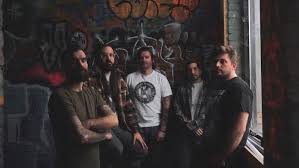
It’s worth taking a step back for a moment. Gros Enfant Mort aren’t newcomers trying to define themselves with this record. The band has been building steadily, from their early EP to La Banalité du Mal in 2022, which already laid out a sharp, politically aware take on screamo and post-hardcore.
Based between Poitiers and Bordeaux, they sit firmly within the French screamo lineage, but without sounding like a throwback act. Touring across Europe helped shape their sound into something tighter and more direct. Le Sang des Pierres doesn’t reinvent who they are, it pushes further in the direction they were already heading, only with more weight and less distance.
What I Take From It
What I appreciate most here is the lack of posturing.
This isn’t an album about depression. It was written from inside it. And that shifts the whole feel of the record.
It’s not comfortable.
But it’s consistent.
In the end, it lands as a dense, confrontational album that isn’t trying to comfort anyone. It’s just trying to put something honest on the table.
FR
Un mot sur le groupe
Il vaut la peine de prendre un peu de recul. Gros Enfant Mort ne sont pas des nouveaux venus qui chercheraient à se définir avec ce disque. Le groupe construit son identité depuis plusieurs années déjà, de leur premier EP à La Banalité du Mal en 2022, qui posait les bases d’un screamo / post-hardcore à la fois frontal et politisé.
Basés entre Poitiers et Bordeaux, ils s’inscrivent clairement dans la lignée du screamo français, sans pour autant sonner comme un simple héritage. Les tournées européennes ont resserré leur jeu, rendu leur son plus direct. Le Sang des Pierres ne redéfinit pas le groupe, il prolonge ce qu’ils faisaient déjà, avec plus de poids et moins de distance.
Ce que j’en retiens
Ce que j’aime ici, c’est l’absence de posture.
Ce n’est pas un album “sur” la dépression. Il a été écrit depuis cet endroit-là. Ça change la texture du disque.
Ce n’est pas confortable.
Mais c’est cohérent.
Et au final, ça donne un album dense, frontal, qui ne cherche pas à rassurer, juste à poser quelque chose d’honnête.
Explore our latest music reviews!
Découvrez nos dernières chroniques musicales !

