Bad Omens Live at the Zenith: From Anticipation to Confirmation EN/FR
EN
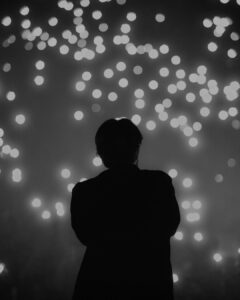
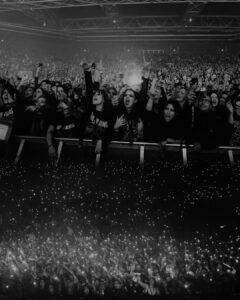
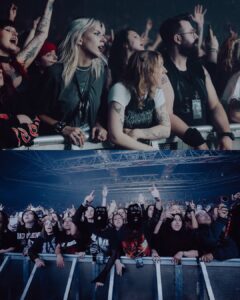
One year after a standout performance at Salle Pleyel, Bad Omens return with their sights set higher and bigger: the Zénith. The announcement of this European tour had already felt like a major event long before the night arrived, and being there only confirms it. Even before stepping inside the venue, there’s a palpable sense that something special is about to happen. Lines stretch far across the forecourt, groups of friends buzz with nervous excitement, some trading predictions about recent tour stops and hoped-for songs, others rushing to the merch stand, fully aware that what’s available now might be gone by the end of the night. Inside, the atmosphere is thick and electric: a room pushed to its limits, impatience almost physical, as if the air itself is vibrating. It becomes immediately clear that this isn’t just another date on a packed tour schedule, but a defining moment in the trajectory of a band that has been steadily leveling up over the past three years.
FR
Un an après un passage remarqué à la Salle Pleyel, Bad Omens revient cette fois-ci en visant plus haut et plus grand : le Zénith. L’annonce de cette tournée européenne avait déjà installé un sentiment d’événement bien avant le jour du concert, et la réalité, sur place, ne fait que confirmer cette impression. Avant même d’entrer dans la salle, on sent quelque chose de particulier. Les files s’étirent loin sur le parvis, les groupes d’amis s’agitent déjà avec nervosité, certains discutent des dernières dates de la tournée, des chansons espérées, tandis que d’autres se ruent sur le merch, conscients que la collection risque de disparaître dans la soirée. À l’intérieur, c’est une atmosphère saturée : une salle chauffée à blanc, une impatience presque physique, comme si l’air vibrait. On comprend immédiatement que ce soir, ce ne sera pas un concert de plus dans un calendrier chargé, mais un moment clé dans l’évolution d’un groupe qui n’a cessé de prendre de l’ampleur ces trois dernières années.

EN
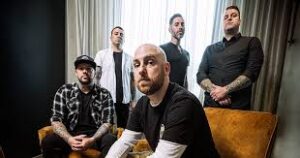
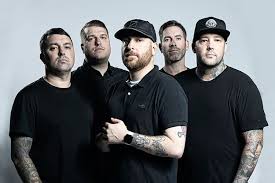
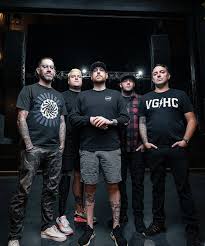
The Ghost Inside Kick Off the Night
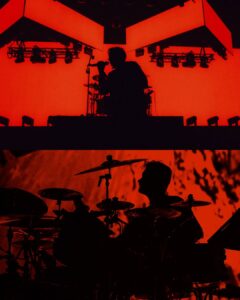
The Ghost Inside open the evening with raw, uncompromising intensity. From the very first notes of Avalanche, it’s immediately clear that the band isn’t here just to fill an opening slot, they’re here to make a statement. The sound hits hard, really hard, to the point where every snare crack and every double-kick impact feels like it’s landing straight in the crowd’s chest. Andrew Tkaczyk’s performance is especially striking, not only for its technical precision, but for what it represents: a drummer who’s been through hell and back, playing with near-superhuman energy despite the tragic history everyone in the room is aware of. There’s a quiet, unspoken respect in the crowd, as if every person understands the weight of simply seeing this band onstage.
The setlist is built to wake people up, shake them, and pull emotions to the surface that go far beyond the mechanics of a live performance. Avalanche jolts the room to life, Engine 45 rips voices from throats, Aftermath briefly freezes time before dropping back into something far more visceral with The Outcast. In the seats and down in the pit alike, people aren’t singing with the polish of a choir, but with the urgency of those who’ve lived these songs. It’s a crushing introduction, and more than that, a statement of intent: The Ghost Inside aren’t an appetizer, they’re laying the first stone of a crescendo that will define the entire night.
FR
The Ghost Inside ouvre le bal
The Ghost Inside ouvre la soirée avec une intensité brute. Dès les premières notes d’Avalanche, on comprend que le groupe ne vient pas simplement remplir un rôle de première partie, mais imposer une présence. Le son frappe fort, très fort, au point de donner l’impression que chaque coup de caisse claire et chaque impact de double pédale se transmet directement dans la cage thoracique du public. La performance d’Andrew Tkaczyk est particulièrement marquante, non seulement pour sa technicité, mais aussi pour ce qu’elle représente : un musicien revenu de tout, qui joue avec une énergie presque surhumaine malgré l’histoire dramatique que l’on connaît. On sent une forme de respect implicite dans le public, comme si chaque spectateur mesurait ce que signifie le simple fait de les voir sur scène.
La setlist est pensée pour réveiller, bousculer, ramener à la surface des émotions qui dépassent le cadre strict de la performance. Avalanche réveille la foule, Engine 45 arrache les voix, Aftermath suspend un instant le temps avant de retomber dans quelque chose de plus viscéral avec The Outcast. Dans les gradins comme dans la fosse, on voit des gens chanter non pas avec la technique d’un choeur, mais avec la nécessité de ceux qui ont vécu ces chansons. C’est une mise en bouche puissante, mais aussi une démonstration : The Ghost Inside ne sert pas d’amuse-bouche, ils posent la première pierre d’un crescendo qui va structurer toute la soirée.


EN
Bilmuri, the Breakout of the Night
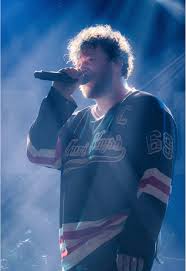
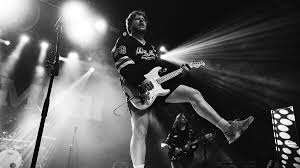
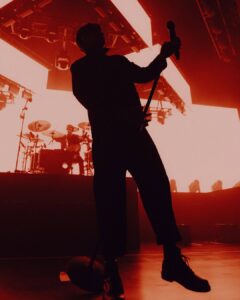
With Bilmuri, the atmosphere shifts dramatically. Where The Ghost Inside felt like a straight-up punch to the gut, Bilmuri lands as a stranger, more unexpected shockwave, almost theatrical in nature. Johnny Franck hits the stage with a presence that goes beyond the music itself: he moves, he commands space, he plays with the rules of the live setting as if he’s building a show within the show. Emptyhanded kicks things off, and it doesn’t take long for the room to get pulled in. The contrast is absolute, and that’s exactly why it works. The night pivots from emotional heaviness to a more hybrid energy, sitting somewhere between raw feeling, humor, and technical flash.
Every member of the band finds a way to draw focus. The guitarist, understated at first, eventually unleashes screams with shocking power. The saxophonist isn’t just an added texture, she becomes a focal point, almost a physical embodiment of Bilmuri’s identity. Solos are treated like moments of bravado, shaped by dynamics, silence, and intent. Then comes the unexpected twist: Bilmuri and his guitarist swap roles, turning the stage into a playground. At that point, this is no longer a conventional concert, but a showcase of what a live show can become when a band refuses to stay inside the lines. Song after song, even the uninitiated are won over. And when Noah Sebastian briefly appears for a perfectly timed “HOO!”, a knowing wink to the crowd, the room explodes. The psychological momentum of the night shifts: the audience isn’t waiting for Bad Omens anymore. They’re ready for them.
FR
Bilmuri, la révélation du soir
Avec Bilmuri, l’atmosphère change radicalement. Là où The Ghost Inside était un coup de poing, Bilmuri est une onde de choc plus étrange, plus inattendue, presque théâtrale. Johnny Franck arrive avec une présence scénique qui dépasse la musique elle-même : il bouge, il occupe, il joue avec les codes du live comme s’il construisait un spectacle dans le spectacle. Emptyhanded ouvre les hostilités et, très vite, la salle se laisse absorber. Le contraste est total, et c’est précisément ce qui fonctionne. On passe de la lourdeur émotionnelle à une énergie plus hybride, à mi-chemin entre l’émotion, l’humour, et la virtuosité technique.
Chaque membre du groupe attire la lumière à sa manière. Le guitariste, d’abord discret, finit par arracher des screams d’une puissance surprenante. La saxophoniste, elle, ne se contente pas d’être une musicienne d’appoint : elle devient un point focal, presque une incarnation de l’identité de Bilmuri. Les solos sont mis en avant comme des moments de bravoure, avec du relief, du silence, de l’intention. Puis ce moment inattendu où Bilmuri et son guitariste échangent leurs rôles transforme la scène en terrain de jeu. Ce n’est plus un concert traditionnel, mais une démonstration de ce que peut devenir un live lorsqu’un groupe refuse de rester dans son cadre. Au fil des morceaux, le public, parfois novice, finit conquis. Et lorsque Noah Sebastian surgit brièvement pour un “HOO!” lancé comme un clin d’oeil complice, la salle éclate. La dynamique psychologique de la soirée vient de changer : l’audience n’attend plus Bad Omens, elle est prête pour eux.



EN
Bad Omens, the Climax
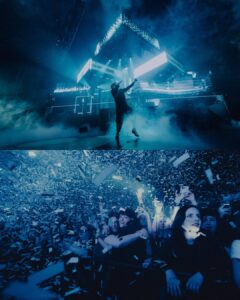
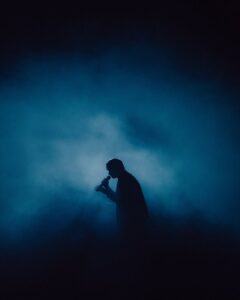
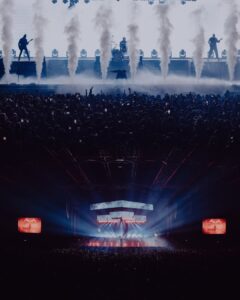
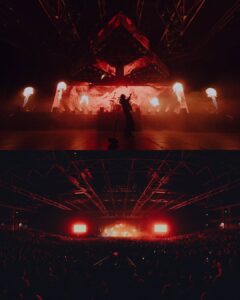
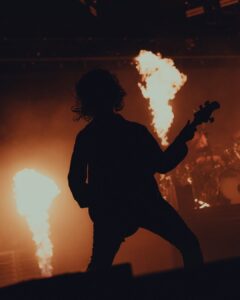
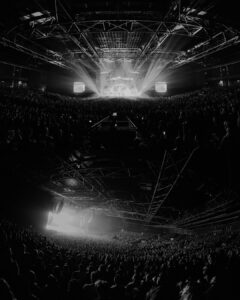
When the lights drop after the stage change, the silence that settles in isn’t just silence. It’s a shared restraint, a collective breath held in place. Then the lights come back up, revealing a stage design that immediately catches you off guard: a pyramid-shaped upper structure, massive screens, carefully controlled lines of fire, every element seemingly dialed in to tell a story. Bad Omens step onstage, and the first impact is visual, almost cinematic. They’re not here to simply play songs; they’re here to bring an entire world to life.
Specter opens the set by instantly setting the tone. Then Glass Houses hits early, and that’s where something shifts. The crowd changes. This is no longer just singing along, people are throwing themselves into the words. Voices merge, bounce off one another, and crash against the walls of the Zénith. That sequencing choice speaks volumes about a band that fully understands its catalog, what it evokes, and what it wants to unleash. From there, the show moves with remarkable flow: quiet moments, explosive highs, breathers before impact, followed by controlled comedowns. The night unfolds like a film where you don’t notice the chapters passing.
Anything > Human becomes a turning point. Jonathan Vigil’s presence turns the song into a conversation, building a bridge between what came before and what’s happening now. The show stops feeling like a series of performances and becomes a single, continuous narrative. Just Pretend triggers the biggest wall of voices of the night, and when Dethrone hits as the encore, the entire room erupts, not just in sheer aggression or physical intensity, but in the collective scale of the moment. It’s a release, a final peak, a way of saying: this is exactly where it was always meant to lead.
FR
Bad Omens, le point culminant
Quand les lumières s’éteignent après le changement de plateau, le silence qui s’installe n’est pas un simple silence. C’est une retenue collective, un souffle suspendu. Puis la lumière se rallume et révèle une scénographie qui surprend : un haut de scène pyramidal, des écrans monumentaux, des lignes de feux maîtrisées, comme si chaque élément avait été calibré pour raconter quelque chose. Bad Omens entre, et le premier impact est visuel, presque cinématographique. Le groupe n’arrive pas pour jouer des chansons : il arrive pour faire exister un univers.
Specter ouvre la setlist en installant immédiatement un climat. Puis vient Glass Houses, très tôt dans le set, et là, quelque chose bascule. Le public se transforme. On ne chante plus seulement, on se jette dans les paroles. Les voix s’unissent, se répondent, s’écrasent contre les murs du Zénith. Ce choix d’enchaînement montre un groupe conscient de son répertoire, de ce qu’il provoque, et de ce qu’il veut provoquer. La suite du concert navigue avec une fluidité remarquable : moments calmes, titres explosifs, respirations avant l’impact, puis retombées maîtrisées. La soirée se déroule comme un film dont on ne voit pas passer les chapitres.
Anything > Human devient un moment charnière. La présence de Jonathan Vigil transforme la chanson en dialogue, crée un pont entre ce qui s’est passé en première partie et ce qui se joue maintenant. Le concert cesse d’être un alignement de performances et devient une histoire continue. Just Pretend déclenche le plus grand mur de voix de la soirée, et quand arrive Dethrone en rappel, la salle se déchaîne. Pas uniquement dans la violence des hurlements ou l’intensité des mouvements, mais dans l’ampleur collective de ce qui se produit. C’est une libération, un point d’orgue, une façon de dire : c’est ici que ça devait mener.
Photos by Bryan Kirks
EN
This show wasn’t just another stop on a tour schedule. It was a milestone, a marker on a career map still unfolding, a moment where a band proves it has stepped into a whole new league. Bad Omens are no longer trying to win anyone over; they’re simply acknowledging that they already have. The Zénith didn’t just applaud. It took part. It carried the moment. It confirmed it.
The real question isn’t whether they’ll reach the biggest venues. It’s how long it’ll take before they fill every single one of them.
FR
Ce concert n’était pas simplement une date de tournée. C’était un jalon. Un point donné sur une carte de carrière qui s’étire, un moment où un groupe prouve qu’il a changé d’échelle. Bad Omens ne cherche plus à convaincre : ils constatent qu’ils ont déjà convaincu. Le Zénith n’a pas seulement applaudi. Il a participé. Il a porté. Il a confirmé.
La question qui reste n’est pas de savoir s’ils atteindront les plus grandes salles. La question est de savoir combien de temps il faudra avant qu’ils les remplissent toutes.
Review by Vittori Design
Explore our latest live reports!
Découvrez nos derniers live reports !